Customized Routines: How Small Senior Homes Personalize Activities of Daily Living
@knoxpfoy401
November 20, 2026 · 22 min read
Business Name: BeeHive Homes of Portales
Address: 1420 S Main Ave, Portales, NM 88130
Phone: (505) 591-7025
BeeHive Homes of Portales
Beehive Homes of Portales assisted living is ideal for those who value their independence but require help with some of the activities of daily living. Residents enjoy 24-hour support, private bedrooms with baths, medication monitoring, home-cooked meals, housekeeping and laundry services, social activities and outings, and daily physical and mental exercise opportunities. Beehive Homes memory care services accommodates the growing number of seniors affected by memory loss and dementia. Beehive Homes offers respite (short-term) care for your loved one should the need arise. Whether help is needed after a surgery or illness, for vacation coverage, or just a break from the routine, respite care provides you peace of mind for any length of stay.
1420 S Main Ave, Portales, NM 88130
Business Hours
Walk into a well run small senior home at 8 a.m. And you will not see a single, stiff schedule applied to everybody. One resident is completing oatmeal and coffee at the warm cooking area table. Another is still in bed, listening to jazz with the curtains half drawn. Another person is currently dressed and folding laundry by option, because it makes them feel beneficial. Exact same time of day, three very various mornings.
That is the quiet power of customized activities of daily living in a small setting. The jobs sound standard on paper, however in practice they are how people experience their day: getting out of bed, bathing, dressing, using the bathroom, walking around, eating meals, handling medications. When those regimens are tailored in a thoughtful assisted living or board and care home, they protect self-respect and identity instead of stripping it away.
Over the previous two decades operating in senior care, I have seen large facilities with lovely features, and I have seen six bed homes tucked into ordinary areas. The smaller homes do not always win on decoration or fitness center equipment, but they typically outpace larger operations on one vital measurement: the ability to adapt everyday care around one person at a time.
What "small senior homes" truly look like
Families use different terms: small assisted living, residential care home, board and care, adult family home. Regulations vary by state, but the basic picture is similar. A normal home serves in between 4 and 16 citizens, typically in a transformed single family house or a purpose developed small house. Staff work in close distance to residents, sharing typical areas, helping with meals, and supporting everyday routines.
Compared with a 60 or 120 bed assisted living neighborhood, a small home starts with a number of integrated in advantages for tailoring care:
Staff ratios are typically tighter. Rather of one caregiver for 12 to 20 homeowners, you may see one caretaker for 3 to 6 homeowners throughout the day. During the night, a single caregiver may cover the entire home, but still with far fewer individuals to monitor.
Documentation is simpler and more individual. Care strategies are not just electronic charts. In excellent homes, they reside in the staff's memory, in the posted notes on the refrigerator, in the way morning shift reminds night shift about a resident's new preference for chamomile rather of black tea.
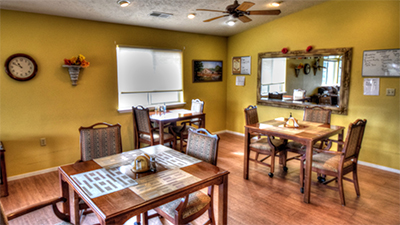
The environment acts like a family, not a hotel. The line in between "my space" and "the common location" feels closer to family life, which enables routines to flow more naturally. Citizens can gravitate to their favored spots without going through long passages or formal dining rooms.
These structural features matter due to the fact that they make it possible to differ one-size-fits-all regimens. If you only have 6 people to wake, shower, gown, and serve breakfast, you can pay for to let someone sleep up until 9 a.m. You can invest ten extra minutes assisting another resident choice a preferred clothing instead of hurrying to strike a seat count in the dining room.
Activities of daily living as identity, not just tasks
Healthcare specialists typically divide daily function into "ADLs" and "IADLs." It sounds clinical. In practice, each of those ADLs brings a piece of who the person is and how they see themselves.
Bathing can be a susceptible minute or a small high-end. A retired mechanic who prided himself on self sufficiency may withstand help in the shower because it seems like a loss of independence, while another resident finds comfort in a caretaker who knows just how warm to make the water and which lavender soap she likes.
Dressing is not just about staying warm and covered. Clothes ties to self-respect, modesty, cultural background, even previous functions. I still remember a former bank supervisor who relaxed visibly when personnel recognized he required a pressed button down shirt, even with elastic waist trousers, to feel "prepared for the day."
Toileting and continence discuss embarassment and personal privacy. Badly handled, they are a big source of distress. Managed respectfully, with proactive timing and quiet help, they become one more routine that protects self-confidence rather of eroding it.
Mobility is autonomy. Whether someone strolls individually, utilizes a walker, or requires a wheelchair, the concerns are the exact same: How can we keep them moving safely, and how can we prevent turning them into a passive traveler in their own life?
Feeding and meals represent even more than calories. They are social time, sensory experience, and memory triggers. Small senior homes that cook in an open kitchen, with gives off onions sautéing or cookies baking, tap into that psychological layer of care.
Medication management is typically the least individual part of the day in large settings. In smaller homes, the exact same caregiver might understand how to match tablets with a joke or a preferred muffin, and might see subtle changes in how a resident swallows or reacts.
Treating these tasks as identity moments, not just as care obligations, is the beginning point genuine personalization.
How small homes find out each resident's "default setting"
Personalization does not take place by accident. The best small homes construct it on a couple of essential practices.
First, they take consumption seriously. I have actually seen admissions finished with a clipboard in 20 minutes, and I have seen them take two hours around a table with tea and household pictures. The second method produces much better care. Staff ask not just "Can you shower yourself?" however "Do you prefer showers or baths? Morning or evening? Alone or with the door partly open so you can hear the TV?" For somebody with dementia, households frequently fill out the gaps about long-lasting habits.
Second, they create a working bio. It may be a formal "life story" document or simply a personnel culture of telling stories about homeowners throughout shift modification. A note like "Julia taught second grade for thirty years and hates being rushed" has direct ramifications for how you manage her mornings.
Third, they view and adjust over the very first weeks. What a resident or family reports on day one does not constantly match truth in a new setting. Stress and anxiety, unknown restrooms, different beds, or brand-new medications can move sleep patterns and continence. Small personnels often observe quickly, due to the fact that the person is not one of many at the end of a long hallway. If Mr. Lopez declines his 7 a.m. Shower 3 early mornings in a row, caregivers can suggest a late early morning or night routine almost immediately.
Finally, they provide frontline personnel genuine authority. In big centers, caregivers may have little space to deviate from the printed schedule. In well handled small homes, the administrator anticipates caretakers to improvise within reason and to revive concepts that worked. That autonomy is important for tailoring.
Morning routines: getting up as yourself
Mornings expose very quickly whether a small home really customizes care or simply duplicates a smaller version of institutional routines.
I recall 2 locals from the very same home who might not have been more different. One, a retired nurse in her late seventies, woke naturally at 5:30 a.m. Her whole adult life. She took pleasure in the peaceful and liked to shower early, have coffee, and enjoy the early news. The other, a previous musician in his eighties, had been a lifelong night owl. Requiring him out of bed before 9 a.m. Made him irritable and confused.
In a larger building with 80 locals, both may receive a basic 7 a.m. Get up and 8 a.m. Breakfast due to the fact that the staffing design demands it. In the small home where they lived, the overnight caretaker began the nurse's shower at 6 a.m. By choice, then sat her at the kitchen table with coffee before the day shift arrived. The artist had a care strategy that specifically stated "Do not wake before 8:30 unless medically needed." His first hour of the day was purposefully slow and disorganized, with breakfast prepared when he was totally awake.
That type of distinction depends upon small details: understanding who sleeps lightly, who requires a mild voice or a touch on the shoulder rather of intense lights, who prefers to choose their own clothes versus having actually 2 clothing set out. In time, caretakers in a small home learn these nuances nearly the method member of the family do. Awakening becomes something that occurs with somebody, not to them.
Bathing and grooming: privacy, comfort, and cultural respect
Bathing is one of the most individual ADLs, and one where bad handling can rapidly cause rejections, agitation, or straight-out fear, particularly in homeowners with dementia.
Small senior homes have a much easier time matching bathing regimens to personal history. For example, lots of older adults grew up without everyday showers. Requiring a shower every morning might feel invasive and even unnecessary to them. In a 6 bed home, it is completely practical to set up baths 2 or three times a week for those homeowners, while still supplying everyday face washing, oral care, and grooming.
Cultural and religious norms also matter. Some residents prefer exact same gender caregivers for bathing. Others have specific expectations around modesty, such as keeping certain body parts covered as much as possible. In a small home, staffing and scheduling can frequently respect these requirements, instead of treating them as inconvenient.
Temperature and sensory sensitivity play a practical role. I have seen aggressive "behaviors" vanish when we stopped hurrying somebody into a cold restroom and rather warmed the room, laid out thick towels in their favorite color, and played soft music. These are small, inexpensive changes, however they require time and attention.
Grooming regimens, like shaving, hair styling, or makeup, are typically overlooked in bigger settings. In small homes, I have viewed caregivers find out exactly how one resident liked her lipstick and earrings before church, or how another chosen a hot towel shave every other day. These are not high-ends. They are ways of stating, "You are still you."
Dressing and continence: function without compromising dignity
Clothing options illustrate the compromise between security, benefit, and self expression. A resident at threat of falls might require durable shoes and simple to put on trousers, but that does not automatically indicate institutional sweats. In small homes, personnel typically have time to assist residents adapt their own style utilizing elastic waist slacks, adaptive t-shirts with concealed Velcro, or layered clothing for warmth.
I keep in mind a lady who had always used collaborated clothing with precious jewelry. In her first week in a small home, personnel observed her mood enhanced when they involved her in choosing a scarf and necklace each morning, even when they eventually had to secure the clasp for her. That minute or 2 of participation was an ADL intervention, not fluff.
Toileting and continence care benefit greatly from close observation. In a big facility, scheduled toileting might happen every two hours on a stiff round. In a small home, caregivers can sync bathroom offers with the individual's natural pattern: right after breakfast and lunch, before brief strolls, before bed. They quickly learn subtle signs that somebody needs the bathroom however may not verbalize it, such as uneasyness or specific fidgeting.
The distinction in between an "accident susceptible" resident and a mainly continent individual frequently comes down to this sort of proactive, individualized timing. It reduces humiliation, skin breakdown, and urinary infections. Households in some cases ignore how much calmer a parent will be when they no longer live in fear of public accidents.
Mobility and "integrated in" activity
In small senior homes, movement is not restricted to scheduled workout classes. The very design encourages short, meaningful trips: from bed room to kitchen, from preferred chair to garden, from living space to mail box. For homeowners with movement obstacles, caretakers can weave these motions into ADLs in subtle ways.

For a person who utilizes a walker, staff may position the coffee pot simply far enough from the table to encourage a short walk, with close supervision, each early morning. Rather of wheeling someone to the bathroom, they might permit extra time and stand-by assistance so the resident can stroll with a gait belt.
What looks like "helping with ADLs" on a care plan can operate as low level, regular physical therapy. The key is to strike a balance in between safety and autonomy. Small homes, with far less locals to monitor, can legitimately provide one person an additional 5 minutes to walk at their pace instead of pressing a wheelchair to conserve time.
I have likewise seen the way small teams discover changes early: a small shuffle, slower transfers, new doubt on stairs. That early detection allows for timely doctor visits, medication reviews, and maybe home based physical therapy, rather of waiting on a fall and an emergency clinic visit.
Mealtime regimens: more than three scheduled seatings
Meals in small senior homes feel and look different from restaurant style dining in big assisted living communities. The cooking area is normally close enough that citizens can smell food cooking. Some may sit at the table while staff prepare breakfast, which naturally triggers discussion: "Do you desire eggs today or just toast?" "Orange juice or tea?"
From an ADL perspective, this environment uses flexibility in timing and format. A resident who wakes earlier might have a light first breakfast, then sign up with others later on for coffee and a pastry. Somebody with advanced dementia might be calmer with 3 or 4 smaller meals and snacks, served when they show interest, instead of being anticipated to eat 3 large plates on an accurate clock.
Texture adjustments and special diet plans are much easier to individualize when the cook is preparing meals assisted living portales nm for eight rather of eighty. You can have one plate pureed, one sliced, and one routine without frustrating the kitchen. Staff can also notice patterns: Joe eats much better when his tablets are offered after breakfast, not before; Maria drinks more when her water is seasoned with a slice of lemon.
This is also where respite care remains end up being a chance to test and refine regimens. When a family sends a parent for a week of respite care in a small home, mindful personnel might recognize that the "poor appetite" reported in the house is partially a function of timing, solitude, or the method food exists. That insight can take a trip back home with the household, or may inform a permanent relocation if needed.
Medication and health regimens that fit the person
Medication management tends to look standardized from the outside: times, dosages, blister packs. Personalization appears in the way medications are woven into every day life and how adverse effects are noticed.
For example, a diuretic provided too late at night might guarantee night time restroom journeys and bad sleep. In a small home, caretakers see the instant impact. They witness the resident shuffling to the restroom at 2 a.m., then groggy at breakfast, and can flag this pattern to the nurse or doctor. Changing the timing to late morning can considerably improve quality of life.
Similarly, discomfort medications for arthritis or persistent neck and back pain can be set up to peak before the most active part of the day, or before a recognized trigger like bathing. That enables locals to take part more totally in their own ADLs instead of requiring total assistance.
Small teams also observe mood and cognition variations associated with medications: a brand-new antidepressant that makes somebody more participated in grooming, or a sedative that leaves them too sleepy to eat. These subtleties typically get missed in larger operations where different personnel communicate with the individual at various times and in various departments.
The function of relationships: connection as a medical tool
Personalizing ADLs is not only about procedures. It depends heavily on stable relationships. In small homes, the same 3 to six caretakers typically cover most shifts. Residents get used to the same faces assisting them bathe, gown, and move. That familiarity constructs trust, which in turn makes intimate care less difficult and more effective.
I have actually viewed a resident with sophisticated dementia withstand bathing from a new team member, then relax almost immediately when a familiar caretaker took over. There was no magic expression. It was the body language, tone of voice, and shared history: "It's me, Anna, the one who constantly sings your church songs while we clean your hair."
Continuity likewise helps personnel recognize small modifications that could signal health issues: a brand-new tremor when holding a tooth brush, wincing when raising an arm throughout dressing, or unstable transfers from chair to walker. These observations are often first made throughout ADLs, not during formal assessments.
For families, this relational stability is part of what identifies excellent small homes from average ones. High turnover undermines customization. A home that keeps caretakers for many years, not months, can build up a deep understanding of each resident's peculiarities and preferences.
Working with households before, during, and after move-in
Families show up with their own routines and stressors. Some have been offering hands-on elderly take care of years, waking multiple times in the evening to assist with toileting or roaming. Others are stepping in after an abrupt hospitalization. Small senior homes that stand out at personalized ADLs often involve families closely.
This begins even before admission, with truthful conversations about what is operating at home and what is not. A boy might explain his mother as "declining showers," but when penetrated, it turns out she just declines when he tries to help and resists far less when a female caretaker is involved. That information forms staffing assignments.
Respite care is a powerful tool here. Brief stays, often lasting a couple of days to a couple of weeks, permit the home to find out the person while providing the household a break. Throughout respite, staff can experiment with timing, sequence, and approaches to ADLs. They might discover that Dad accepts toileting assistance much better if used right after his mid-morning coffee, or that Mom consumes two times as much when she sits beside somebody who chats gently.
After a move, households require regular feedback, not just about medical problems but about daily routines. An excellent small home will share specific observations: "Your father actually likes choosing between 2 t-shirts rather of having a full closet to look at. It seems to decrease his disappointment when dressing." These information reassure families that their loved one is viewed as a person, not a list of tasks.
Questions households can ask to judge genuine personalization
Families touring small senior homes typically hear comparable expressions: "We offer customized care." "We treat your loved one like family." To learn whether that is true in practice, particular, concrete questions help.
Here work concerns to ask during a tour or care conference:
- How do you decide what time each resident wakes up and goes to bed?
- Who chooses clothes each day, and how do you handle it if a resident's choice is not practical?
- Can you explain how you help somebody who is modest or afraid with bathing?
- What happens if my parent does not wish to consume at the set up mealtime?
- How do you involve households in upgrading routines when health or capabilities change?
The responses should consist of examples, not just policies. Listen for stories that reveal personnel notification and react to specific quirks.
Red flags that routines are not genuinely tailored
Personalized ADLs leave traces visible to a mindful visitor. Similarly, generic care has its own signs. When I consult with households, I motivate them to expect a few caution patterns.
- Everyone wakes, consumes, and showers at the very same times, without any exceptions mentioned.
- Staff refer mainly to "our homeowners" instead of using names and describing specific preferences.
- You see numerous residents in mismatched or stained clothing, or with unshaven faces and unbrushed hair, without a great explanation.
- Bathrooms smell strongly of urine on repeated visits, recommending rushed or badly timed continence care.
- When you ask about your loved one's regular, personnel quote the care strategy but struggle to explain what actually occurred yesterday.
Any one of these may have an innocent reason on a provided day, but a pattern suggests a task focused culture rather than an individual focused one.
The peaceful advantages: safety, state of mind, and realistic independence
When activities of daily living are customized carefully in a small senior home, the benefits are easy to undervalue due to the fact that they look regular. Falls decline since mobility assistance is aligned with how the individual actually moves. Skin remains healthy due to the fact that bathing and continence care are proactive and considerate. Appetite enhances because meals match individual routines and rhythms.
Families frequently report that a parent seems "more themselves" after moving into a small, personalized assisted living home, regardless of the anticipated losses of aging. Part of that impact originates from social connection. Another part comes from the easy relief of having help with ADLs that feels encouraging rather than infantilizing.
Personalized regimens have limits. Not every choice can be honored every time. Staff burnout and turnover stay dangers, specifically in underfunded settings. Some locals need such comprehensive physical assistance that options need to be narrowed for safety. Still, within those restrictions, small homes that deal with ADLs as the material of every day life, not a list, provide older adults a quieter but profound present: the capability to go through normal jobs in a way that still feels like their own.
For families weighing options in senior care, it assists to look beyond the sales brochures and ask, "What will early mornings seem like here? How will my mother be assisted to shower, dress, eat, use the restroom, relocation, and handle her health day after day?" In a good small home, the response sounds less like a timetable and more like a story about one particular individual. That is where genuine customization lives.
BeeHive Homes of Portales provides assisted living care
BeeHive Homes of Portales provides memory care services
BeeHive Homes of Portales provides respite care services
BeeHive Homes of Portales supports assistance with bathing and grooming
BeeHive Homes of Portales offers private bedrooms with private bathrooms
BeeHive Homes of Portales provides medication monitoring and documentation
BeeHive Homes of Portales serves dietitian-approved meals
BeeHive Homes of Portales provides housekeeping services
BeeHive Homes of Portales provides laundry services
BeeHive Homes of Portales offers community dining and social engagement activities
BeeHive Homes of Portales features life enrichment activities
BeeHive Homes of Portales supports personal care assistance during meals and daily routines
BeeHive Homes of Portales promotes frequent physical and mental exercise opportunities
BeeHive Homes of Portales provides a home-like residential environment
BeeHive Homes of Portales creates customized care plans as residents’ needs change
BeeHive Homes of Portales assesses individual resident care needs
BeeHive Homes of Portales accepts private pay and long-term care insurance
BeeHive Homes of Portales assists qualified veterans with Aid and Attendance benefits
BeeHive Homes of Portales encourages meaningful resident-to-staff relationships
BeeHive Homes of Portales delivers compassionate, attentive senior care focused on dignity and comfort
BeeHive Homes of Portales has a phone number of (505) 591-7025
BeeHive Homes of Portales has an address of 1420 S Main Ave, Portales, NM 88130
BeeHive Homes of Portales has a website https://beehivehomes.com/locations/portales/
BeeHive Homes of Portales has Google Maps listing https://maps.app.goo.gl/1xZDfURp3wt4uv3T6
BeeHive Homes of Portales has TikTok page https://tiktok.com/@beehive.home.of.portales
BeeHive Homes of Portales has an YouTube page https://www.youtube.com/@WelcomeHomeBeeHiveHomes
BeeHive Homes of Portales has Facebook page https://www.facebook.com/BeeHiveHomesOfPortales
BeeHive Homes of Portales has Instagram page https://www.instagram.com/beehivehomesofportales/
BeeHive Homes of Portales won Top Assisted Living Homes 2025
BeeHive Homes of Portales earned Best Customer Service Award 2024
BeeHive Homes of Portales placed 1st for New Mexico Senior Living Communities 2025
People Also Ask about BeeHive Homes of Portales
What is BeeHive Homes of Portales Living monthly room rate?
The rate depends on the level of care that is needed. We do a pre-admission evaluation for each resident to determine the level of care needed. The monthly rate is based on this evaluation. There are no hidden costs or fees
Can residents stay in BeeHive Homes of Portales until the end of their life?
Usually yes. There are exceptions, such as when there are safety issues with the resident, or they need 24 hour skilled nursing services
Do we have a nurse on staff?
No, but each BeeHive Home has a consulting Nurse available 24 – 7. if nursing services are needed, a doctor can order home health to come into the home
What are BeeHive Homes of Portales's visiting hours?
Visiting hours are adjusted to accommodate the families and the resident’s needs… just not too early or too late
Do we have couple’s rooms available?
Yes, each home has rooms designed to accommodate couples. Please ask about the availability of these rooms
Where is BeeHive Homes of Portales located?
BeeHive Homes of Portales is conveniently located at 1420 S Main Ave, Portales, NM 88130. You can easily find directions on Google Maps or call at (505) 591-7025 Monday through Sunday 9:00am to 5:00pm
How can I contact BeeHive Homes of Portales?
You can contact BeeHive Homes of Portales by phone at: (505) 591-7025, visit their website at https://beehivehomes.com/locations/portales/ or connect on social media via TikTok Facebook or YouTube
Visiting the Oasis State Park provides peaceful desert scenery and a small lake that residents in assisted living or memory care can enjoy during planned senior care and respite care excursions.